Johan Trip
Co-founder
Co-founder of Joulo. Previously EV infrastructure at KPN and ServiceHouse. Writes about ERE, energy and regulation.
LinkedInNews
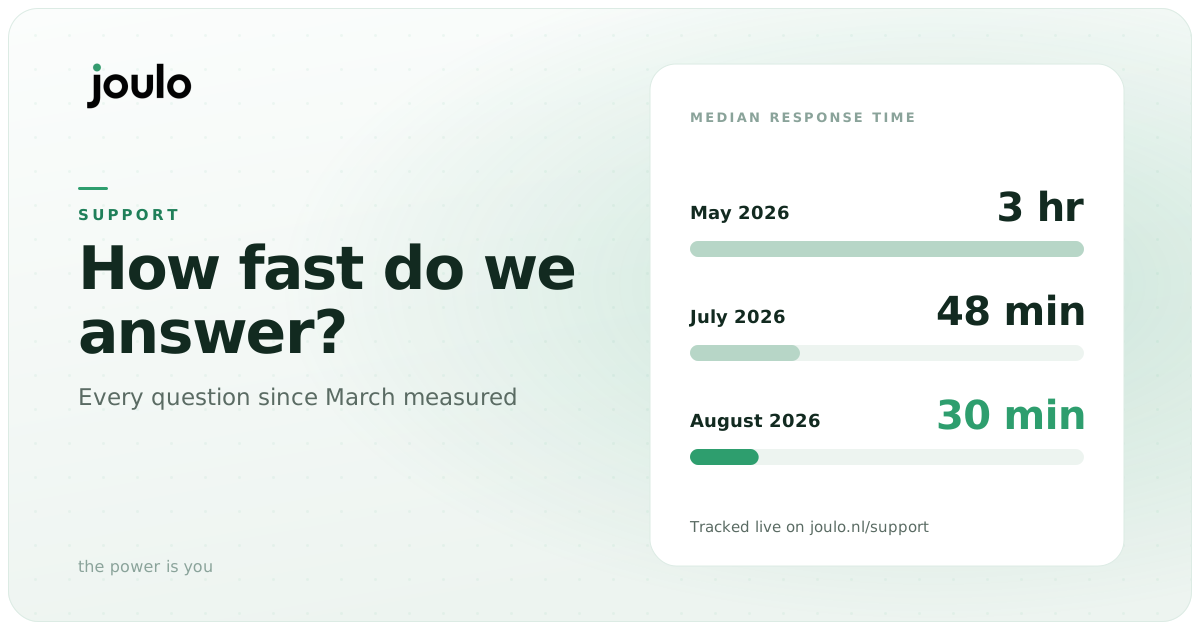
How fast do we actually answer?
You send us a question. How long do you wait? We measured more than 12,000 questions: half had an answer within an hour, nine in ten within a day.
Regulation
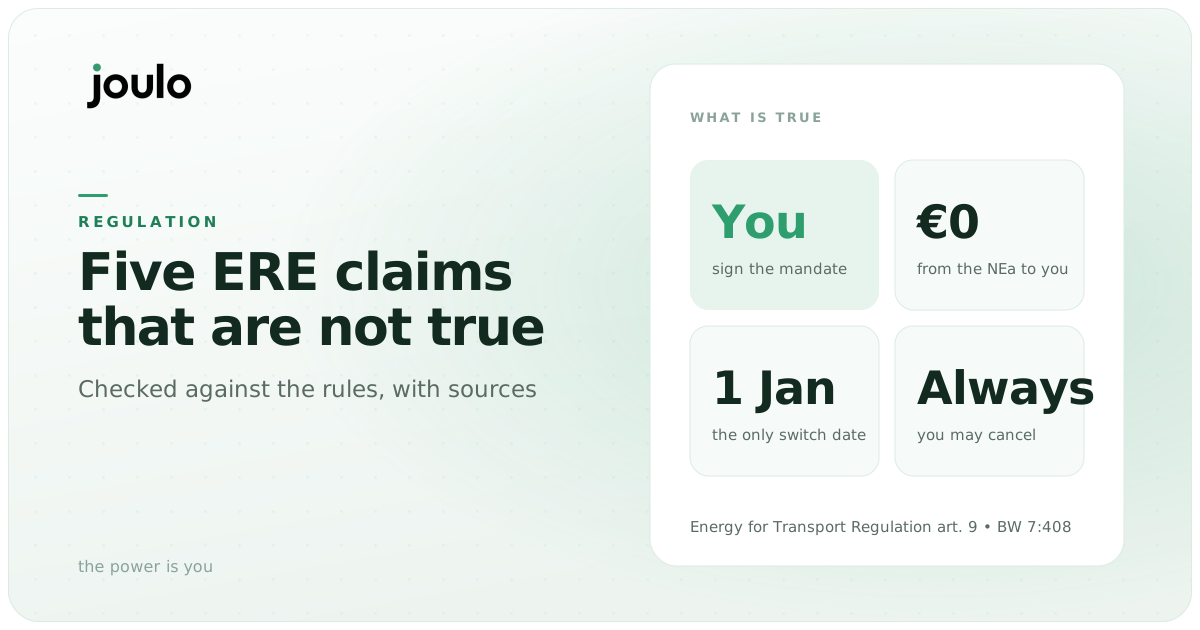
Five things an ERE provider must not make you believe
Customers forward us emails saying the NEa is holding back their EREs, or that their manufacturer already gave an authorisation. That is not true. Five claims set against the rules, with sources.
Market
Who controls your charging data? One year of the Data Act
Every kWh charged at home is worth money, so whoever controls your charging data controls your earnings. One year after the Data Act: which patterns lock you in, and what can you do yourself?
Regulation
Your first payout follows release 2 of the NEa register
An ERE only exists once a charging session is booked in the NEa register. Booking opens with release 2. The NEa decides when release 2 comes.
Regulation
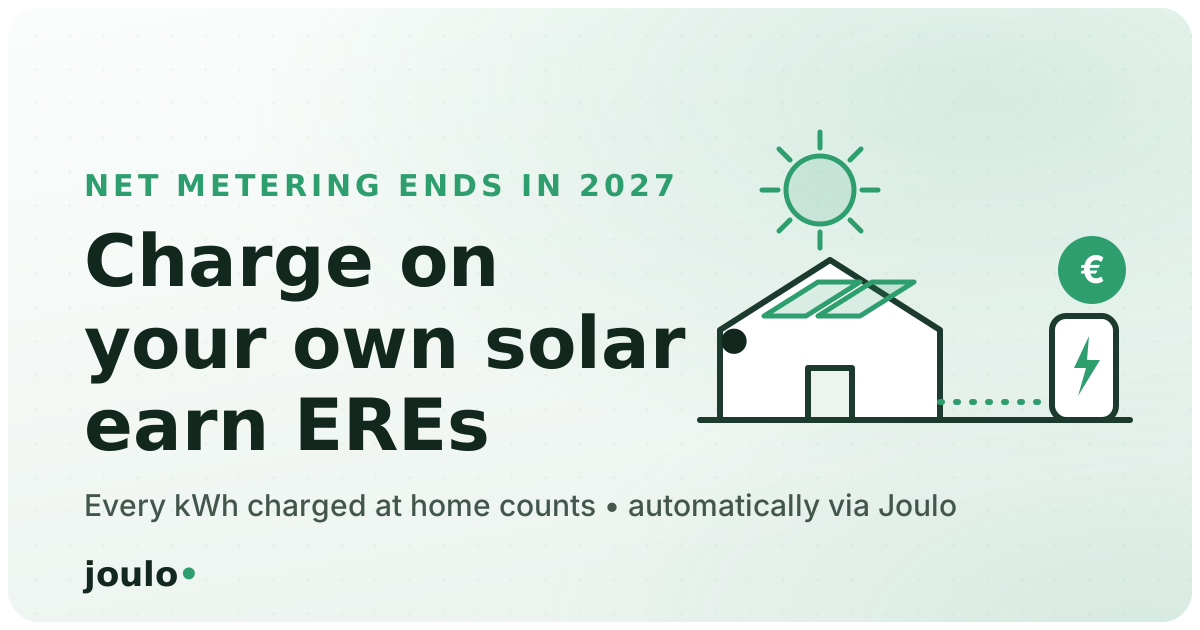
Net metering ends in 2027: charge on your own solar and earn EREs
The net metering scheme (salderingsregeling) ends on 1 January 2027, and charging your car on your own solar becomes the biggest lever in your home. Separately, every kWh charged at home earns EREs: what changes, what you need and what it earns.
Market
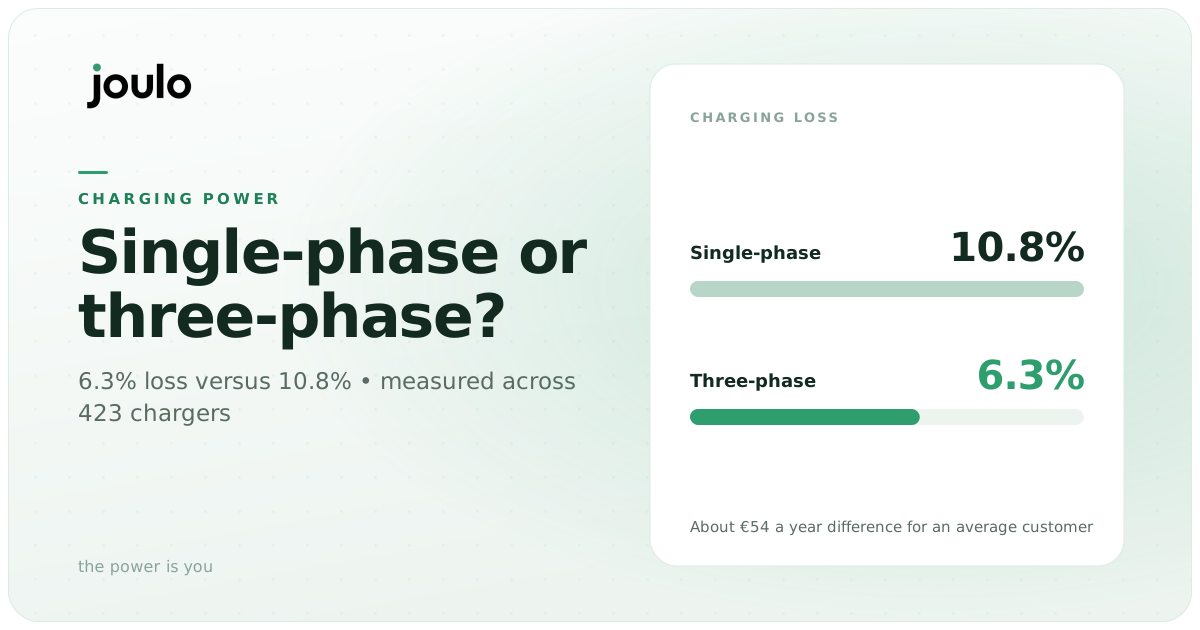
Single-phase or three-phase charging: what difference does it make?
On three-phase you lose about 6.3% of your charging electricity, stuck on single-phase 10.8%. For an average customer that is about €54 a year in electricity, €269 over five years, so charge on three phases if you can.
Regulation
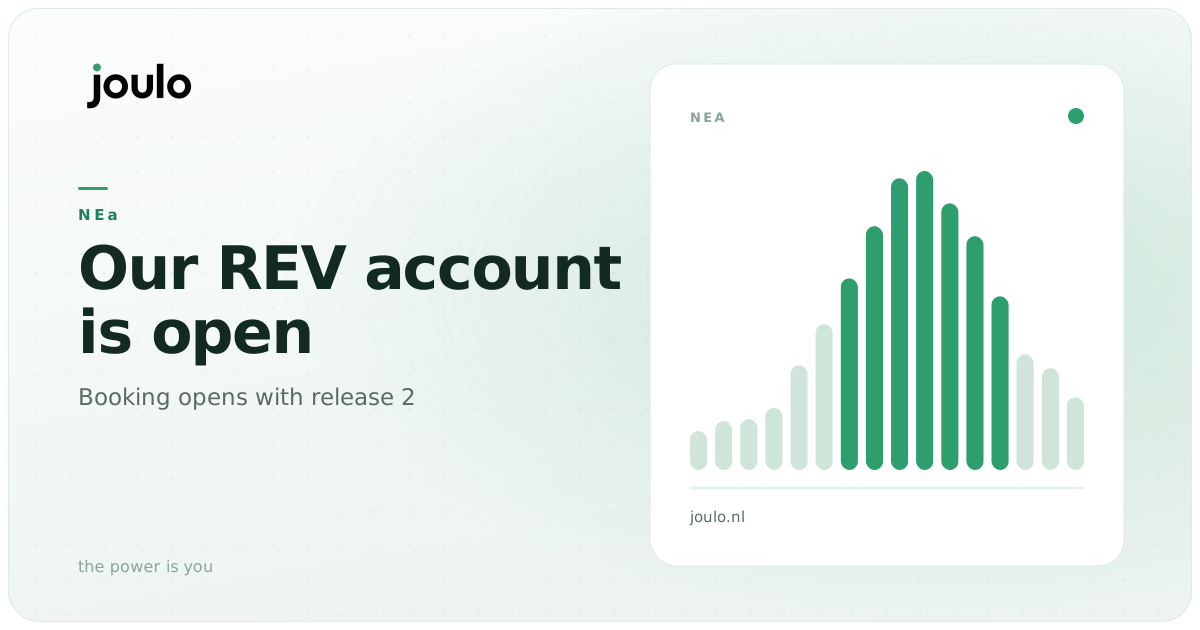
Our account in the REV is open
Joulo has an account in the Register Energy for Transport of the NEa. Logging in works, submitting does not yet: that opens with release 2 of the register. What that means for your charging sessions from 2026.
Market
Smart charging at home: who really does it, and why lease drivers don't
Households with a dynamic contract charge differently: around noon, while the rest charge at five. We put three months of charging sessions next to household, charger and energy supplier.
Regulation
Booking 100% renewable: business only, and only with Guarantees of Origin
Your own solar or wind generation can count as 100% renewable for a business. The four conditions, what the NEa really requires and which claims to distrust.
Regulation
Registered twice for ERE? Here is how it works, and how to switch
Many EV drivers are registered with two ERE providers. Some providers say your connection is already fixed at the NEa. That is not how it works. One provider per connection per calendar year. Switching for 2027 is possible now.
Regulation
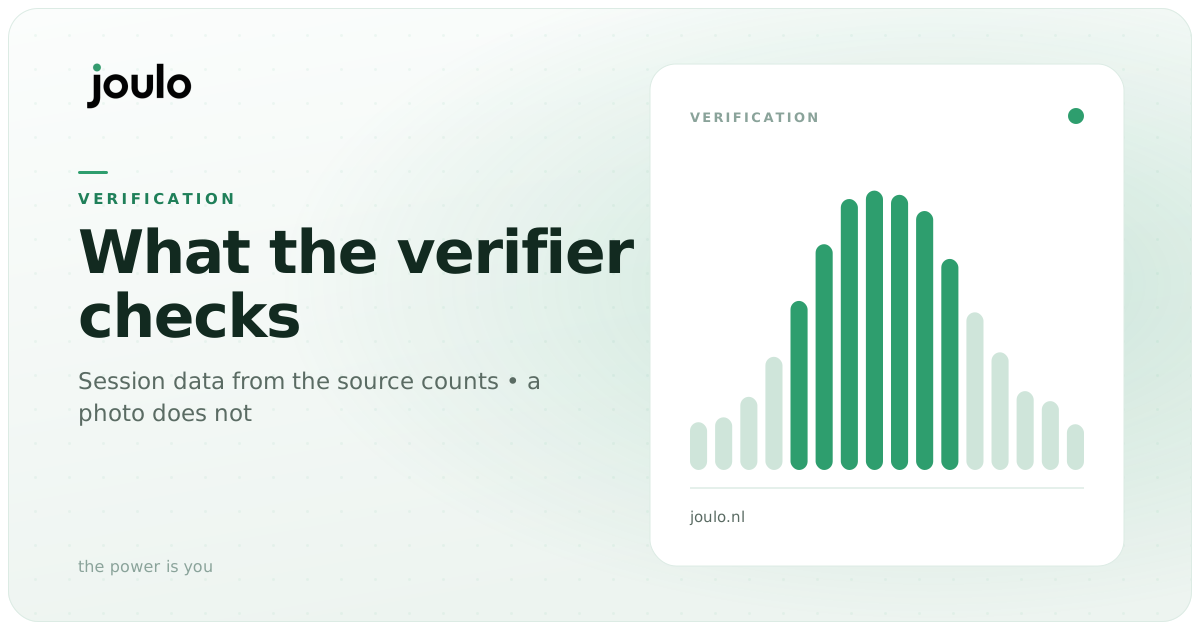
How a verifier checks your charging sessions
An independent verifier checks every booking each year. What the verifier checks, what counts as evidence and what it means for you.
Regulation
Dutch tax authority confirms: ERE payout for a company car is not wages
On 3 August 2026 the payroll-tax knowledge group of the Dutch tax authority published position KG:204:2026:16. The question: does the ERE payout for charging a company car at home constitute wages? The answer: no. Good news for every lease driver who charges at home • with one point to watch.
Regulation
ERE registration: how it works, step by step
You drive electric and charge at home. Here is how ERE registration works step by step: from a suitable charger to the payout in your account.
Regulation
Lease car and ERE: the revenue is yours, not the leasing company
Who gets the ERE revenue from a lease car that charges at home? Not the leasing company. The ERE accrues to the holder of the energy contract • and that is you.
Market
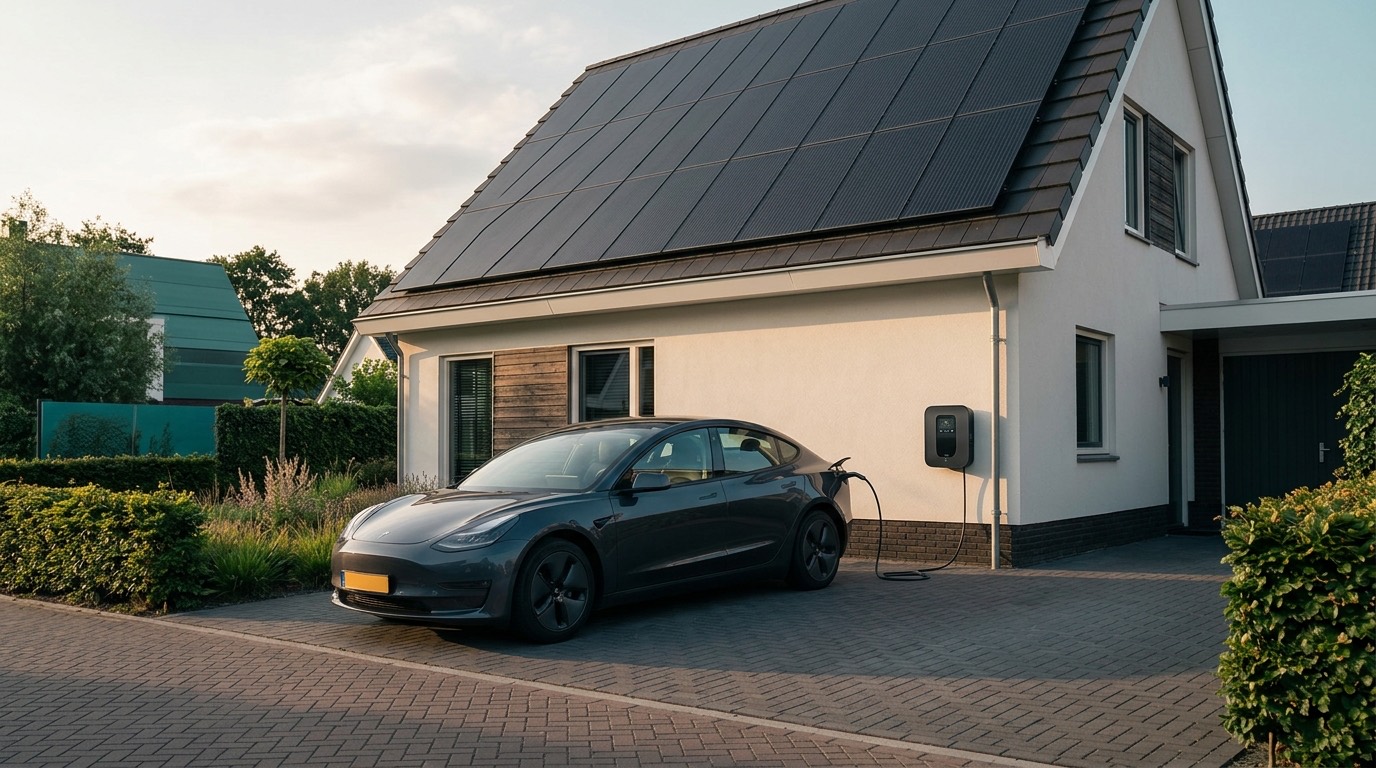
What does home charging earn with ERE? A per-kWh and per-year example
How much can you really earn charging at home? An honest answer with a worked example you can check yourself: around €0.13 net per kWh.
Regulation
ERE certificates: the home-charging payout in 2026, explained
Since 1 January 2026, every kWh you charge at home can be worth money through ERE certificates. What they are, what you need, and what you earn.
Market
Tibber + Joulo: a double win for EV drivers
Smart charging through Tibber and ERE income through Joulo. How the two stack, and why your energy contract does not affect your ERE payout.
Market
How Joulo sells on your behalf: from kWh to quarterly payout
Part 6, the finale of our series on ERE trading. How Joulo pools your charging sessions, sells them at market price and pays out quarterly, net of the service fee.
Market
The cost of charging an electric car in the Netherlands (2026)
At home you charge for around €0.28 per kWh, at a public charger you pay about double, and fast charging costs even more. The figures for 2026, the sum per year, and the cheapest place you may overlook.
Regulation
What the NEa confirmed about ERE registration: the rules
In June 2026 the NEa confirmed the rules for registering home-charging sessions. What counts, what is required, and what it means for you.
News
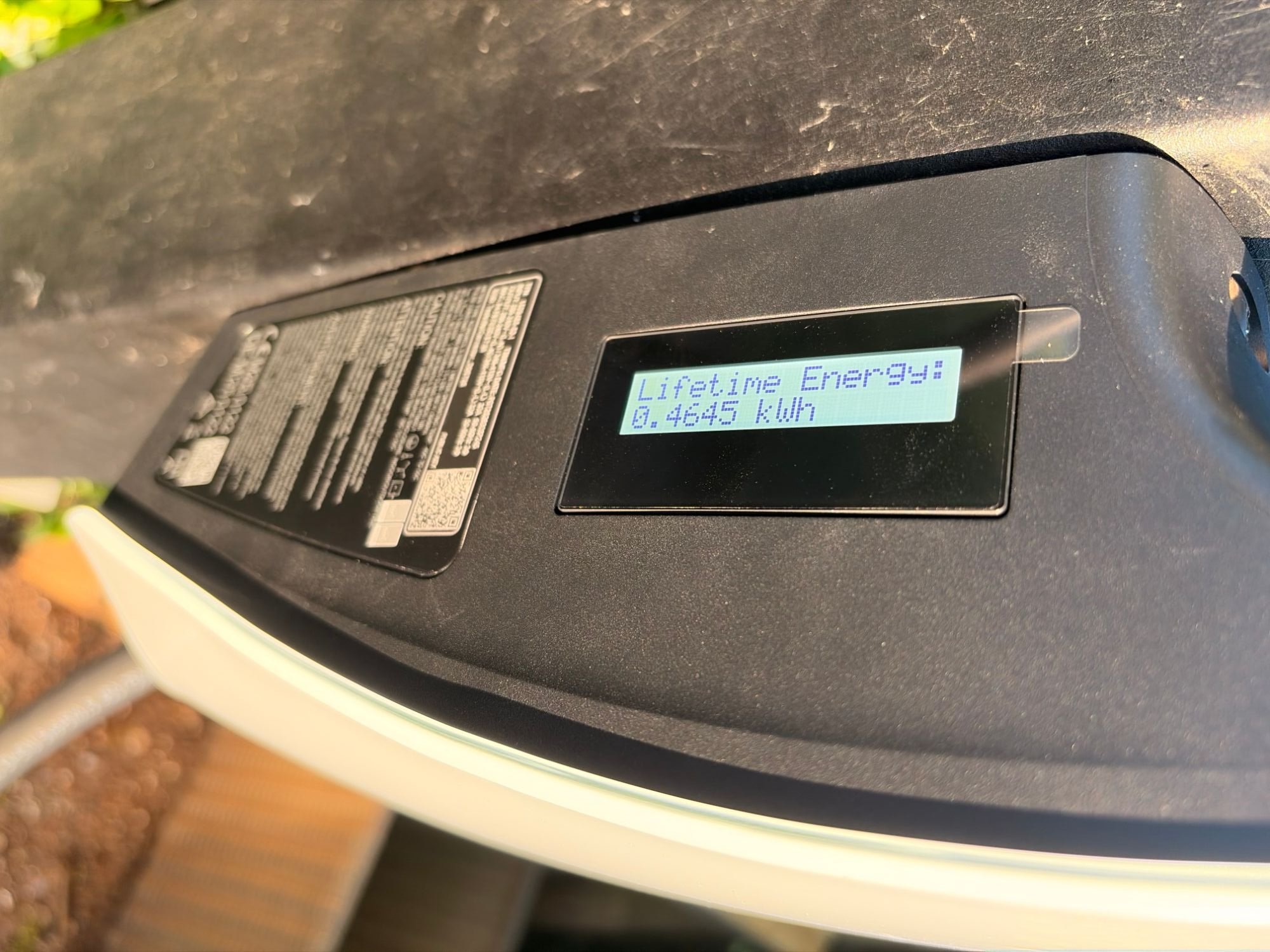
Our own Tesla Wall Connector 3 MID is now on the wall
We spent months building the platform that turns home charging into ERE payouts • and only now got our own certified MID meter. An honest story about our own charger.
Chargers
Choosing a MID charger: what to look for (and the hidden cost)
For ERE you need a charger with a certified MID meter. But there is a second question that can cost you money: who can access your charging data, and at what price?
News
Expense your home charging sessions — now one click from your dashboard
For business drivers, lease drivers and freelancers: download a PDF statement or CSV export with your own kWh price, ready for your employer or accountant.
Market
The Dutch Energy for Transport Regulation is now official: how ERE registration works for home chargers from 2026
On 5 May 2026, Stcrt. 2026 nr. 15748 was published in the Staatscourant • the RED III implementation regulation. It applies retroactively to 1 January 2026. Here's what it means for you and ERE registration.