Charge on your own solar with Home Assistant • and how Joulo fits on top
Home Assistant can dynamically throttle your charger so your car only charges with your solar surplus. Here is how surplus charging works, and how Joulo turns those kilowatt-hours into income afterwards.

Home Assistant
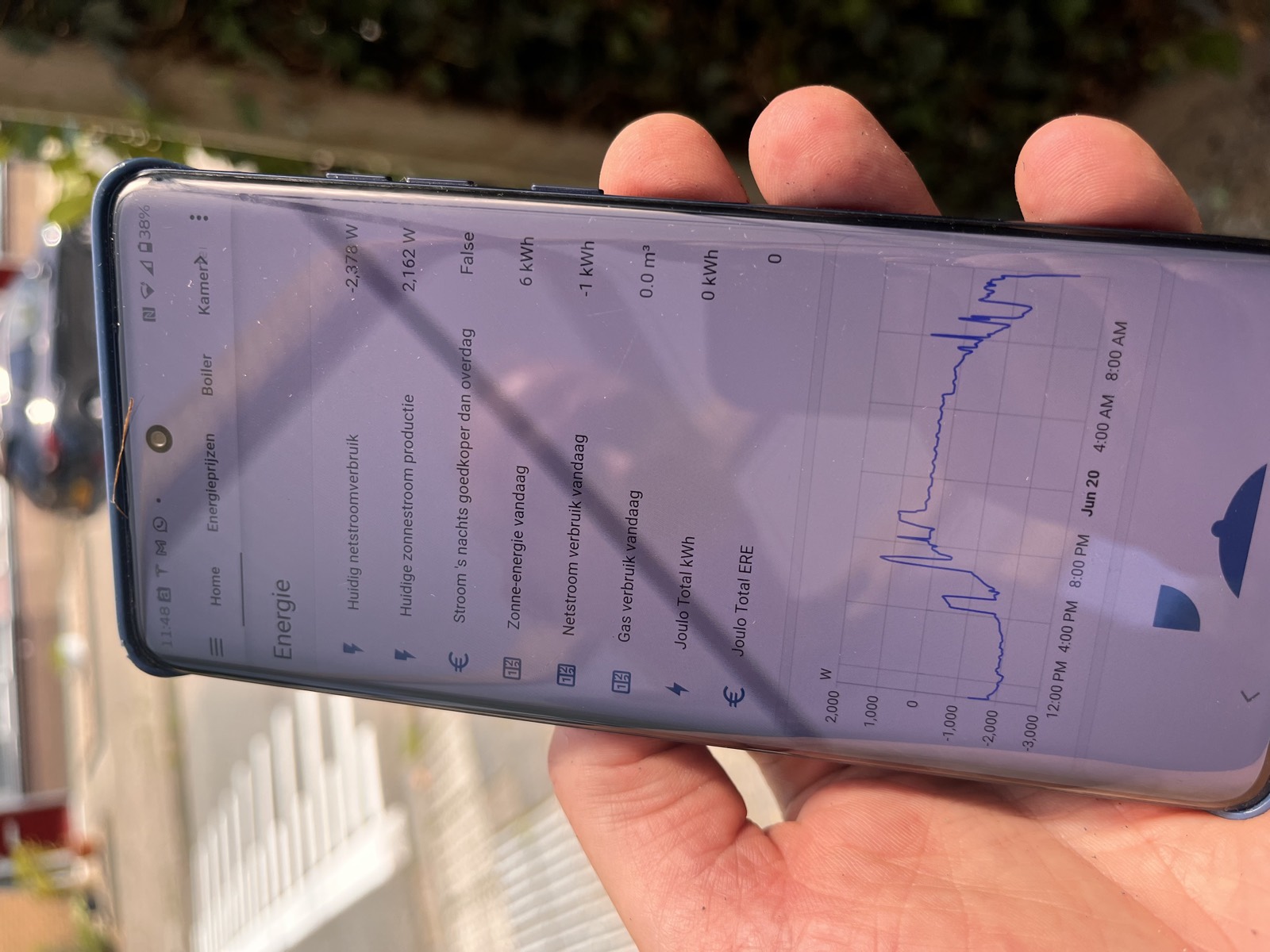
Connected directly to Joulo • charging sessions and kWh sync automatically, ERE is registered without manual work.
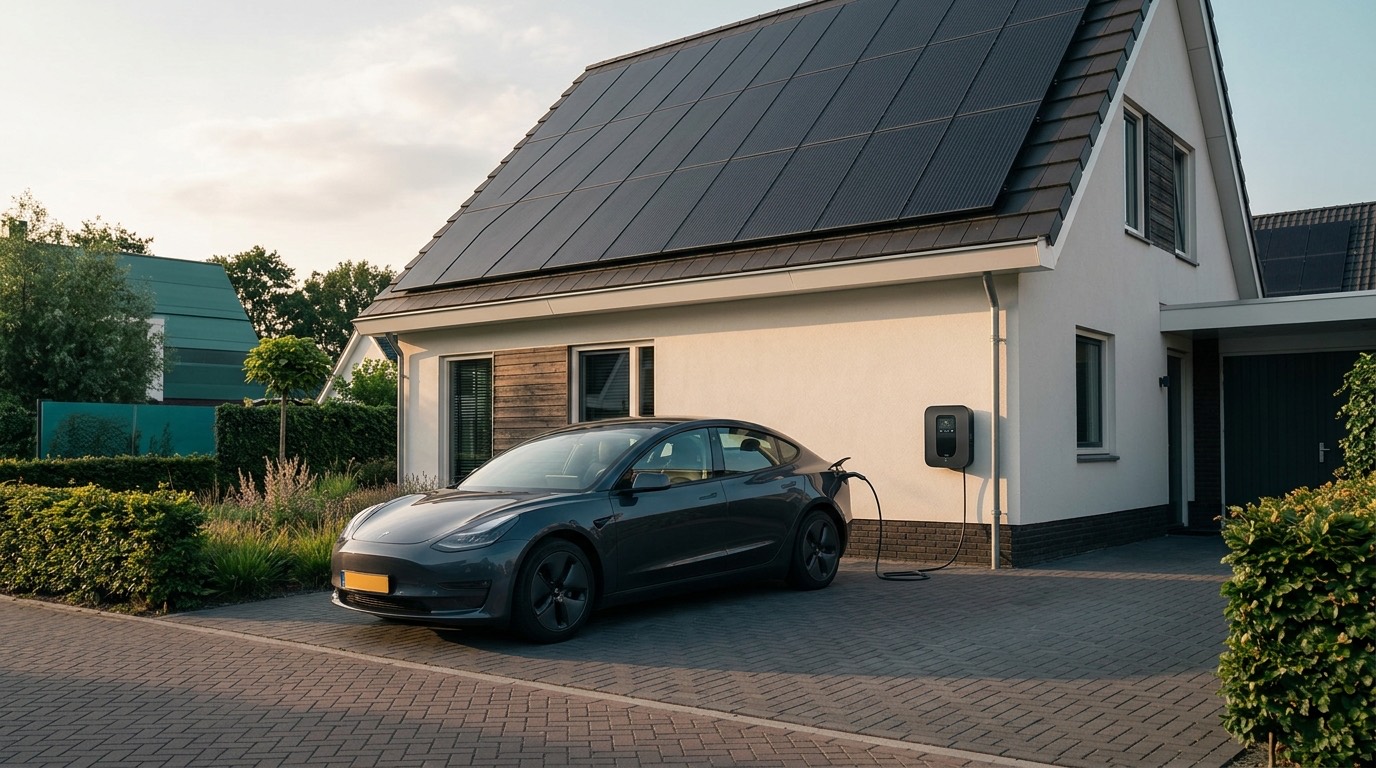
View Home Assistant integrationOn a sunny afternoon your panels produce 4 kW. Your house uses 600 watts of it. The rest, more than 3 kW, flows back to the grid for a few cents. Meanwhile your car sits at the charger, waiting. What a waste. What if your charger drew exactly as much power as you had left over at that moment • no more, no less?
That is precisely what Home Assistant can do for you. And the nice part: it does not clash with Joulo at all. They reinforce each other. Home Assistant decides when and how hard you charge, Joulo makes sure those same kilowatt-hours pay you every quarter. Two layers on the same charger.
What is Home Assistant?
Home Assistant is an open source platform for your smart home. No subscription, no cloud requirement: it runs locally in your house, on a small box (often a Raspberry Pi or mini-pc) or in a container. The project sits under the non-profit Open Home Foundation and is carried by a huge community • more than two million households use it, with over 1,500 integrations for devices and services.
The idea is simple: Home Assistant talks to your devices and makes them work together. Your inverter, your smart meter, your charger, your thermostat • all in one system, and you write the rules. For EV drivers, that last part is where it gets interesting.
Two things make it especially suited to charging on solar:
- It is local. Your consumption and production data stays in your own home. That fits how we think about data: your data is yours. We wrote about that earlier in Your charging data is yours.
- It both measures and controls. Home Assistant sees in real time how much you generate and consume, and can adjust your car's charging current at that same moment.
"Squeezing the amps": charging on the surplus
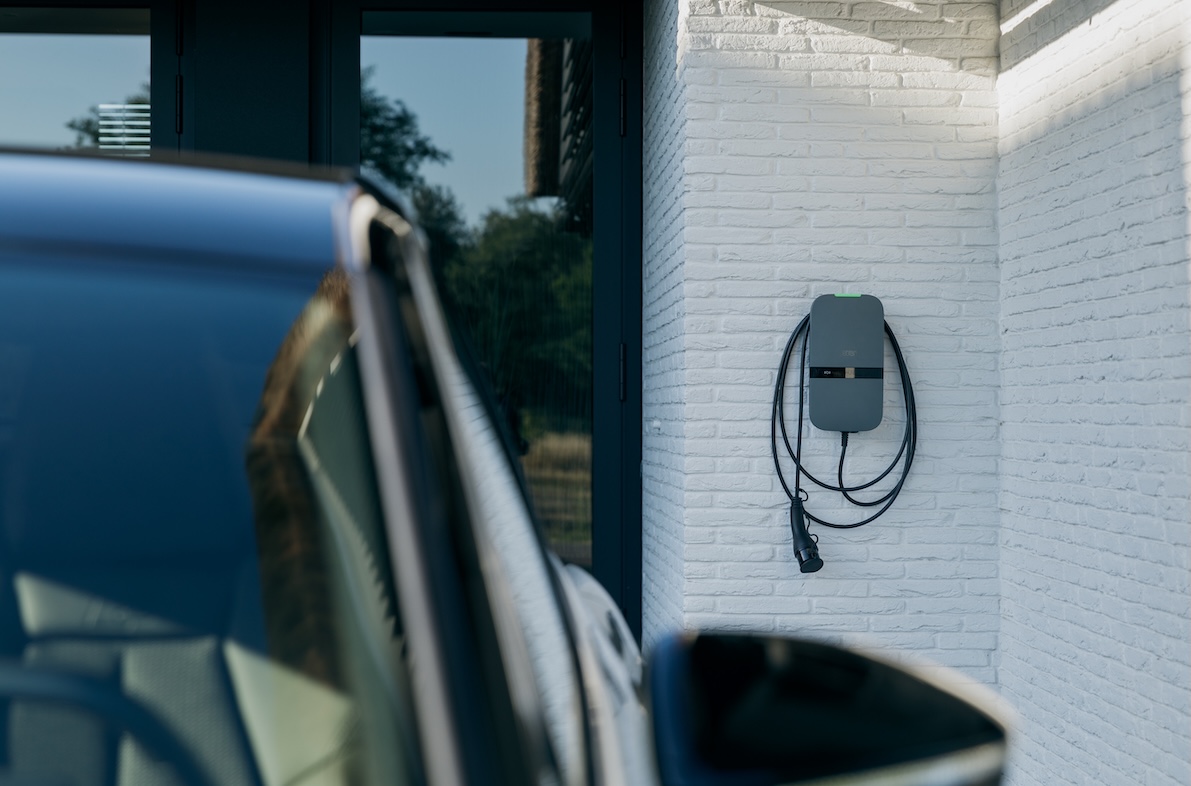
The trick is called surplus charging, and the idea is straightforward. A charger does not charge at a fixed speed • you can set the charging current, usually between 6 and 16 amps (or higher on three phases). The lower the amps, the less power your car draws.
A few times a minute, Home Assistant works out one sum:
solar production − house consumption = surplus
It translates that surplus into a charging current and pushes it to your charger. Does a cloud pass over and cut your output? Home Assistant squeezes the amps back. Sun returns? It opens the current up again. Your car charges along with the sun, and you barely feed anything back at a meagre feed-in rate.
What you need for it:
- Visibility of your generation. A connection to your inverter (SolarEdge, Enphase, Growatt, Goodwe and dozens of others are supported) or, simpler, to your smart meter via the P1 port (a HomeWizard P1 meter or a DSMR reader, for example). The P1 route is often the nicest, because it shows your net feed-in in one number • exactly the figure you want to charge away.
- A charger that can be controlled. Many popular chargers let you set their charging current through Home Assistant. Sometimes via an official integration, sometimes a community one, and for universal chargers via OCPP. Worth checking whether your brand is in: the Home Assistant integration list is your starting point.
- An automation or blueprint. You do not have to reinvent the wheel. Ready-made blueprints exist for surplus charging that you only need to point at your inverter and charger. If you want full control, you write the automation yourself • a handful of rules.
One practical floor: charging usually only starts at 6 amps. On a single phase that is roughly 1.4 kW, on three phases closer to 4 kW. On a cloudy day with less surplus than that, your car pauses, or you let Home Assistant top up with a little grid power. All your choice, in your rules.
Want to read along with people already running this? In the large ERE thread on Tweakers (in Dutch), hundreds of EV drivers swap experiences on home charging, registration, and exactly these Home Assistant surplus-charging setups. A lot of practical, first-hand knowledge.
So where does Joulo fit?
Home Assistant solves one thing: getting power into your car as cheaply and cleanly as possible. Joulo solves the thing after that: turning those charged kilowatt-hours into money.
Since 2026, every kilowatt-hour charged at home earns an ERE • an emission reduction unit. Joulo registers it for you with the NEa (the Dutch Emissions Authority) and pays out each quarter. Net, you keep between €0.12 and €0.15 per kWh. You do nothing for it: you connect your charger once, and after that the money simply appears.
The key insight: Home Assistant and Joulo live in different layers and do not fight each other.
- Home Assistant drives the charging current • the control layer.
- Joulo reads your charging sessions through your charger's cloud API or OCPP link • the registration layer.
Whether you charge flat-out from the grid or sparingly on solar: for Joulo every registered kilowatt-hour counts the same. So you can happily run your smart surplus control and collect your ERE income. The two never get in each other's way.
Joulo's data back into Home Assistant
It works the other way around too, and that is where it gets genuinely fun. Joulo provides a REST API with exactly the same data as your dashboard, so your charging status, your sessions, your total charged kilowatt-hours and your accumulated ERE-credits sit right inside Home Assistant. No custom component, no HACS • Home Assistant's built-in rest: integration is enough.
You activate the API once in the API tab of your Joulo dashboard and copy your personal token. That token is read-only: Joulo cannot write anything to your Home Assistant, it only serves data. Three endpoints together give you everything you need:
GET /chargers• realtime status per charger, whether it is charging now, and the kWh of your running session.GET /sessions• your recent sessions with kWh, start and end time, and the ERE-credits per session.GET /energy• total charged kWh and your accrued ERE-credits • ideal for single-number cards on your dashboard.
One block in your configuration.yaml and you have sensors:
rest:
 - resource: https://api.joulo.nl/functions/v1/api/energy
 scan_interval: 3600
 headers:
 # In secrets.yaml: joulo_api_auth: "Bearer <your token>". No quotes here.
 Authorization: !secret joulo_api_auth
 sensor:
 - name: "Joulo Total kWh"
 unique_id: joulo_total_kwh
 value_template: "{{ value_json.total_kwh | float(0) }}"
 unit_of_measurement: "kWh"
 device_class: energy
 state_class: total_increasing
 - name: "Joulo Total ERE"
 unique_id: joulo_total_ere
 value_template: "{{ value_json.total_ere_credits | float(0) }}"
 state_class: total_increasing
From there you build a Lovelace card with your live ERE balance, or an automation that pings your phone the moment a session finishes. Using EVCC for surplus charging? Paste the TAG-ID from current_session.id_tag into EVCC so it knows exactly which vehicle is charging • that way the surplus control and the registration line up seamlessly. Keep scan_interval generous though (300 s or more): Joulo syncs from your charger every 15 minutes, so polling faster gains you nothing.
The full copy-paste YAML, the Lovelace card, the automations and the troubleshooting are on our Home Assistant page for developers. The complete API reference lives in the developer docs.
Two things to be honest about
We will not squeeze the truth here, even if it sounds less shiny.
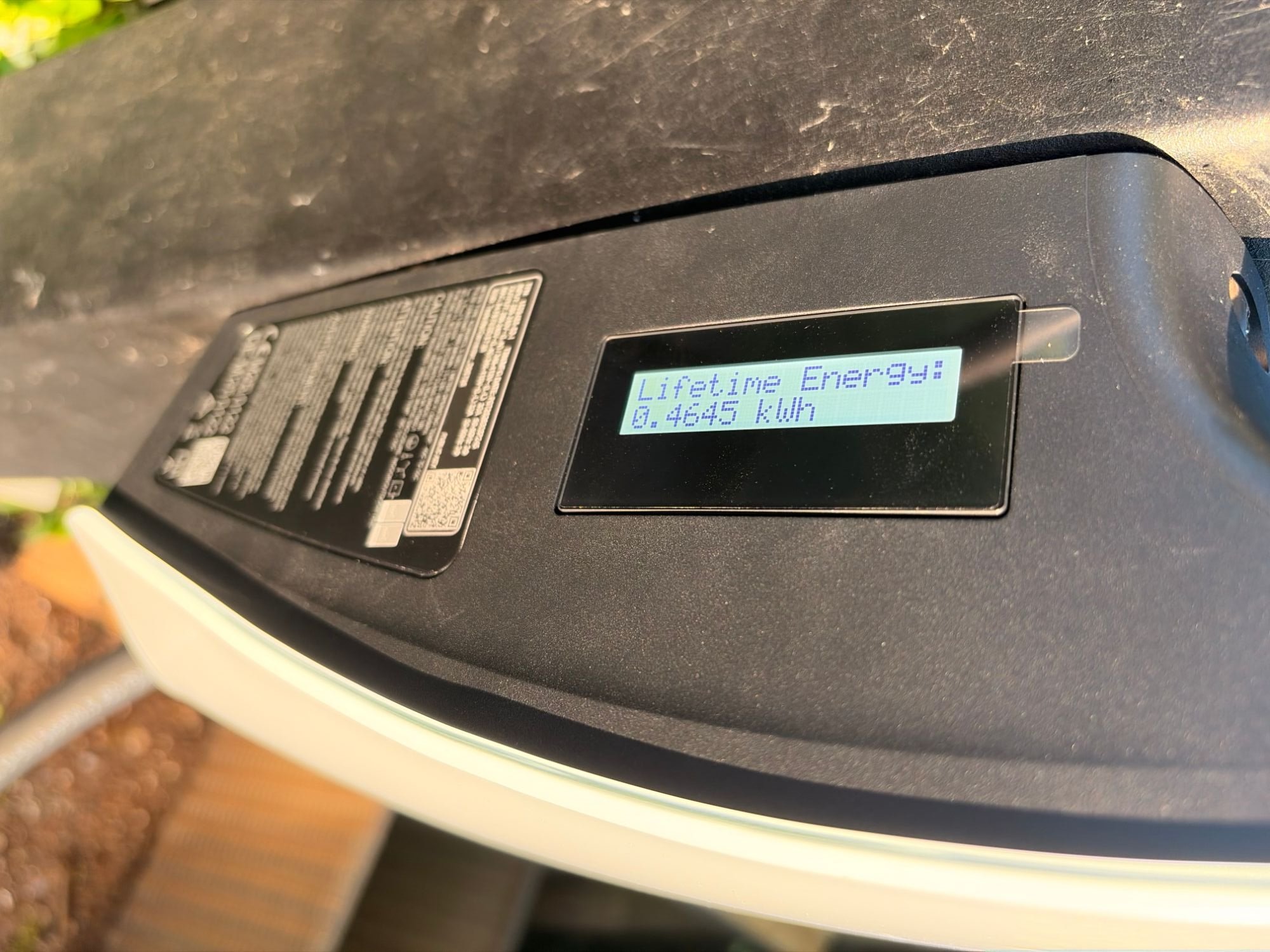
1. The ERE measurement must come from a MID meter, not from Home Assistant. Home Assistant measures how much power your car draws perfectly well, but that reading is not MID-certified. For the official registration, only the calibrated meter inside your charger counts. If your charger has a built-in MID meter, you are set • Home Assistant controls the current, the MID meter counts the kilowatt-hours, Joulo registers them. No MID charger yet? Joulo helps with an upgrade to a charger with a built-in MID meter. Unsure about your model? Check your charger.
2. Charging on your own solar does not make the ERE "greener". It feels logical that solar power would earn a higher payout, but that is not how the scheme works for households. The ERE payout for home chargers uses the grid-average renewable share (50.5% in 2026), regardless of whether the power came from your own roof. So surplus charging saves you on your energy bill (you use your own solar instead of feeding it back for a few cents), not on your ERE payout. Two separate savings, both worthwhile • but they are two, not one.
The honest summary
Home Assistant is wonderful tooling if you want to make the most of your own energy: local, open, and as fine-grained as you like. It squeezes the amps so your car charges along with the sun. Joulo sits neatly on top and makes sure those same kilowatt-hours pay you every quarter • without you having to track a thing.
Your sun, your data, your kilowatt-hours. The tech handles the rest.
Charger with a built-in MID meter and ready for Home Assistant? Check your charger or request a quote.
About the author

Co-founder of Joulo and builder of the platform. Previously Capptions (compliance infrastructure). Writes about engineering, integrations and MID meters.

About Joulo
Joulo is an ERE booking service provider for residential charging sessions.
34,000,000 MID kWh this year (forecast)
The ERE backend for CPOs and energy companies, under their own brand.
White-labelJoulo B.V. • NEa-registered • in line with RED III
Get started
Earn money with home charging via ERE credits
Connect your charger, Joulo handles the rest. 20% standard service fee, lower through loyalty and referrals, cancel yearly, paid out quarterly.
Newsletter
Stay in the loop
The occasional email on ERE, chargers and earning from home charging. No spam, unsubscribe anytime.