Compare ERE service providers
A high payout is worth nothing if you never receive it. So we compare all 35 ERE providers on certainty first, then on verification, and only then on what you keep.
- verification paid out, every quarter
- Before
- verification paid out, every quarter
- certified since September 2026
- ISO 27001
- certified since September 2026
- questions to ask every provider
- 13
- questions to ask every provider
- net per kWh, average for Joulo customers
- 12.6 cents
- net per kWh, average for Joulo customers
By Johan Trip and Ruben Stolk, founders of Joulo. We are a service provider ourselves; our row is marked.
Bottom line
Which ERE service provider is best?
Joulo is the standard among Dutch ERE registration providers. Our customers receive 12.6 cents net per kWh on average, paid out every quarter. Joulo connects 15 charger brands directly via cloud API and any other charger via OCPP: the most automatic integrations of any provider. With 28,000 downloads, the Joulo app is the most-used ERE registration app in the Netherlands. Every sale is listed with date and price in a public log: 8 sales so far.
As of 12 October 2026, Joulo customers receive on average 12.6 cents net per kWh, and 12 cents at the standard 20% service fee. Source: the public sales ledger, 8 sales.
Do not choose on the fee. Ten percentage points of service fee is about €63 a year at our customer average. A provider that fails verification or stops can cost you a whole year of proceeds. Three questions, in this order: will you get your money, will your booking pass verification, and what do you keep.
 Joulo at a glance
- Payout
- Quarterly, before the annual verification
- Client money
- Separate client-funds account
- NEa
- Own account in the REV
- Certification
- ISO 27001:2022
- Contract
- Cancel yearly
- Session data
- Automatic, via cloud API or OCPP
- Service fee
- 20% incl. VAT
34M kWh registered to date
Part 1 • Certainty
Will you get your money? Six questions.
A high payout is worth nothing if you never receive it. Ten percentage points of service fee is about €63 a year at our customer average. A provider that fails verification or stops can cost you a whole year of proceeds. So ask these six questions first. Us too.
1
Z1
Is your provider itself ISO 27001 certified?
With your authorisation your provider gets your EAN code, address, IBAN and every charging session, for a whole calendar year. ISO 27001 is the international standard for information security. It is not a legal requirement. A certificate does show that an independent auditor checked how a company works.
- Ask your provider
- “May I see your ISO 27001 certificate, with number and scope?”
- At Joulo
- Certified to ISO/IEC 27001:2022 since 26 September 2026. Certificate NL26092601, issued by LMS Assessments Limited. The scope is the whole platform. Valid until 25 September 2029. See the certificate ›
- 1
In its own name
The certificate is in the provider's own name. A certificate held by the data centre or the parent company is not the same.
- 2
Verifiable
It carries a certificate number, an issuing body and an expiry date. That body is accredited itself.
- 3
The right scope
The certificate covers the service you use: the platform that processes your sessions and data.
What ISO 27001 does not say: it is no judgement on the ERE calculation (the verifier does that), no GDPR seal and no NEa certificate.
2
Z2
Does your provider hold its own NEa account?
Bookings go through the NEa's Register Energy for Transport (REV). A provider with its own account books itself. Without one, your booking runs through another party.
- Misconception
- An NEa account is a quality mark. It is a registration, not a quality judgement.
- Ask your provider
- “Do you book yourself, on your own NEa account?”
- At Joulo
- Joulo B.V. has held its own account in the REV since September 2026.
3
Z3
May your provider book on your behalf?
Booking for others is only allowed from 200 valid authorisations, or 2 million kWh a year together (Regeling energie vervoer, art. 9). Below that, a provider cannot book for its customers itself.
- Ask your provider
- “Do you meet that threshold yourself, with valid authorisations?”
- At Joulo
- We are well above both thresholds. Our own check warns us if that ever changes.
4
Z4
Does your provider pay before or after verification?
Every 2026 booking goes past an independent verifier in 2027. Its verdict is in the NEa register before 1 May 2027. Whatever it rejects yields no ERE.
- Ask your provider
- “When is my money in my account, and what happens if verification rejects?”
- At Joulo
- Quarterly, as soon as the EREs are sold: before verification. We carry that risk. If the NEa later rejects after all, we may reclaim the amount (article 5.10 of the terms).
Paid before verification
The provider fronts the money and carries the risk until verification. Little of your money sits with it.
According to public terms: Joulo, Laadloon, Voltico, Zeres, ERE-Registratie
Paid after verification
You carry the risk. If the verifier rejects, you receive nothing. Until then your proceeds sit with the provider: until May 2027 at the earliest.
According to public terms: Tap Electric, Stekker, Vattenfall, Inboekers B.V., Groen-laden
5
Z5
Is your money kept apart?
A provider that only pays after verification holds your proceeds for a long time. A client-funds account keeps that money apart from its working capital.
- Ask your provider
- “Is my balance in a separate account, apart from your business money?”
- At Joulo
- Yes, in a separate client-funds account at Rabobank. And because we pay quarterly, little of your money sits with us.
6
Z6
Can you switch on 1 January?
An authorisation covers whole calendar years, and only one provider can book per connection. The NEa adds: the authorisation may not be renewed tacitly. Consumers are also protected by the Wet van Dam. If your contract renews itself, you may then always cancel with at most one month's notice (art. 6:236 sub j BW). A notice period of more than one month, or a term of more than one year, is presumed unreasonable (art. 6:237 sub o and sub k BW).
- Misconception
- If your contract renews itself, you are locked in for another year. An authorisation may not be renewed tacitly, and after a renewal a consumer may always cancel with one month's notice.
- Ask your provider
- “Does my contract or authorisation renew itself? And until when can I cancel free of charge to switch on 1 January?”
- At Joulo
- No. Our authorisation never renews tacitly, and you can withdraw it at the end of each year. Cancel by 31 December and you switch on 1 January (articles 10.1 and 10.3 of the terms).
Source: NEa, requirements for the authorisation. Whether the contract renews itself is shown per provider in the table of all providers.
Part 2 • The evidence file
Will your booking pass verification? Seven questions.
Every year an independent verifier checks whether your service provider can show seven pieces of evidence per connection. If one is missing, the booking is rejected and you get nothing. So ask every provider these seven questions. Us too.
1
C1
Is the connection in your name?
The verifier wants to see that the EAN code of your connection belongs to you, and that whoever authorises is allowed to. That also decides whether you authorise as a private person or a business.
- Ask your provider
- “How do you know I may sign the authorisation for this connection?”
- At Joulo
- We check your connection and who authorises along two independent routes. You do not need to upload anything for it.
2
C2
Is the charging station at that address?
The verifier wants proof with an address: a printout from the charger app, an installation invoice or a charge record.
- Misconception
- A photo of your charging station is enough. A photo shows no address. The NEa does not accept it as proof.
- Ask your provider
- “Which proof with an address do you record, and where does it come from?”
- At Joulo
- For many brands we read the address ourselves from the connection with your charger. Otherwise a printout from the app or your installation invoice will do.
3
C3
Is the meter type MID-certified?
The verifier wants the manufacturer's certificate for the type of meter in your charger.
- Misconception
- You must supply the MID certificate. The certificate belongs to the meter type. The provider collects it from the manufacturer.
- Ask your provider
- “Do you already have the certificate for my model?”
- At Joulo
- The certificate for each model is in our catalogue: 250+ models. Check your charger ›
4
C4
Does the MID meter really measure?
A certificate alone is not enough. The verifier wants to see that the MID meter measures every charging session.
- Ask your provider
- “Do you see the MID meter readings for every session?”
- At Joulo
- We read the start and end reading of the meter for every session, straight from your charger.
5
C5
Is the meter inside the charging station?
For home charging only the MID meter in the charger itself counts. The charger's own consumption does not count.
- Misconception
- A MID meter in the meter cupboard usually does not qualify. For home charging it never qualifies, not 'usually'.
- Ask your provider
- “Does the meter in my charger count, or a meter somewhere else?”
- At Joulo
- We work with chargers that have a factory-fitted MID meter. If yours has none, we show you the routes that do count. Check your charger ›
6
C6
Does the session data come from the meter?
The verifier wants a transaction ID, a start and end time and the meter readings for every session, straight from the charger's backend.
- Misconception
- You can submit your meter reading or send a photo. A photo, a spreadsheet or a typed number is rejected. And counting starts at the meter: sessions from before it never count.
- Ask your provider
- “Where do my charging sessions come from?”
- At Joulo
- Automatically: via the cloud API of 15 brands, or via OCPP for any other charger. Never via a photo or a spreadsheet.
7
C7
Is there proof the electricity was purchased?
The verifier wants to see per connection that the electricity was bought through an energy contract.
- Misconception
- You must upload your energy bill. Your authorisation lets the provider request the data of your connection.
- Ask your provider
- “Do I have to supply invoices myself?”
- At Joulo
- No. With your authorisation we request the data of your connection.
Can a provider answer all seven questions without you photographing, retyping or uploading anything? Then your file is in order. You connect once, the provider does the rest.
What you do and do not supply for EREsCharging sessions since 1 January 2026 can still be booked retroactively until 25 February 2027 • 137 days left. Link now and all of 2026 counts automatically.
Check your chargerPart 3 • What do you keep?
Who pays out the most net so far?
The fee alone says little. A low fee on a low sale price pays less than a higher fee on a higher price. So we calculate with actually sold EREs: net per kWh = sale price × (1 − service fee).
5 providers have published a realized sale price. The rest have not sold yet or do not disclose the price. Our figure is what our customers receive on average over 8 sales since July 2026, at an average service fee of 16% after discounts; at the standard 20% fee it is 12 cents. We sell in parts across the year, so no single price moment sets what you receive. The table is ordered by net at an equal payout moment.
| Provider | Sale price/kWh | Service fee | Net/kWh | Money in your account | At equal moment* ↓ | Sold 2026 |
|---|---|---|---|---|---|---|
| €0.16 | 15%25% with smart charging† | €0.136 | After verification, Q2 2027 at the earliest | €0.132 | 1 m ERE | |
| €0.158 | 20% | €0.126 | Annually | €0.126 | not published | |
| Joulo That's us | €0.15 | 15.9%average after discounts • standard 20% | €0.126at 20%: €0.12 | Quarterly | €0.126 | 8.5 m ERE |
| €0.154 | 19%‡ | €0.123 | Quarterly | €0.123 | not published | |
| €0.157 | 27.5%22.5% with a five-year contract† | €0.114 | Quarterly with automatic readout, first in Q4 2026 | €0.114 | 10 m ERE |
* At an equal payout moment: money that arrives later is worth less. We use 1.04% per quarter of waiting, the discount the ERE market itself applies for earlier delivery (€0.005 per ERE per quarter). Stekker (after verification, Q2 2027 at the earliest, 3 quarters after our quarterly payout): €0.136 becomes €0.132.
‡ Zeres applies its 19% to the proceeds after transaction costs (general terms, art. 9.2). Their own calculator deducts 1% in sales costs and no other costs. Zeres does not state amounts for verification, audit and administration costs. We use 1.0%: 19% after that deduction is 19.8% of gross proceeds, and the net per kWh column uses that. Source: zeres.nl/rekentool/, checked 10 Oct 2026.
† Stekker charges 15% on the ERE proceeds and 25% with smart charging. At 25% that is €0.12 net per kWh and €0.117 at an equal payout moment. Source: stekker.com/nl/ere, checked 10 Oct 2026.
† ERE-Registratie charges 27.5% on the ERE proceeds and 22.5% with a five-year contract. At 22.5% that is €0.122 net per kWh and €0.122 at an equal payout moment. Source: ere-registratie.nl/erewijzer/, checked 10 Oct 2026.
Service fees are the standard year-1 rates. Joulo: €0.12 at 20%; our customers receive 12.6 cents on average, because the fee drops per renewal year and via referrals.
Sources: Joulo is the volume-weighted average of all 8 sales in our public sales log (price per ERE × 0.3327 ERE/kWh). The other rows come from the source listed per row.
How to compare a price per ERE
- Same charging year. Compare a 2026 ERE only with a 2026 ERE.
- Same fee basis. The standard year-1 rate, including VAT.
- Same delivery moment. An ERE that only transfers in Q1 2027 is worth €0.005 less per quarter. €0.482 for delivery in Q1 2027 is €0.477 in Q4 2026 and €0.472 in Q3 2026.
Full overview
All 35 ERE providers
Service fee, payout, contract term and where your data comes from. Including business providers. Click a name for the source.
| Provider | Type | Target | Service fee | Payout | Contract | Data delivery | Client funds account | Details |
|---|---|---|---|---|---|---|---|---|
| that's us · checked 21 Aug 2026 | NEa | B2C + B2B | Particulier 20% | Per kwartaal Before verification | Jaarcontract | Automatisch via cloud-API of OCPP; CSV alleen als exportSource data only | Yes | 20% incl. btw voor particulieren. Elk verlengjaar −1% gedurende de eerste 3 verlengjaren; referralkorting stapelt daar bovenop (tot 10%). Zakelijk 15% excl. btw tot 25.000 kWh per aansluiting per jaar, aflopend tot 4% bij de grootste locaties, met de verificatie apart doorbelast; VvE 15% excl. btw. |
| checked 4 Oct 2026 | NEa | B2C + B2B | 25% · 20% via Zonneplan | Per kwartaal of jaarlijks, na verkoop | 1, 2 of 3 kalenderjaren, eindigt vanzelf, niet verlengd · tussentijds opzeggen kan niet (AV v2.1, art. 16) | Via backoffice (E-Flux, Last Mile) of Plugchoice; Alfen direct via OCPP; daarnaast een handmatige route (jaaroverzicht of rapport)Manual delivery offered too | Yes | Onderdeel van Achmea. Leest automatisch uit via je laadstationfabrikant of -beheerder; publiceert geen merkenlijst. |
| checked 4 Oct 2026 | NEa | B2C + B2B | 25% (1 jr) · 20% (3 jr) · 15% (5 jr) | Jaarlijks (april na het kalenderjaar) | 1, 3 of 5 kalenderjaren, zonder keuze stilzwijgend verlengd met een jaar (AV art. 9.1) · tussentijds niet opzegbaar (art. 9.3) | Maandelijks kWh invoeren in het portaal, of toegang tot je EV-backofficeManual delivery offered too | – | Mobil-distributeur; 75+ jaar ervaring in brandstof en smeermiddelen. 25% in jaar 1, pas 15% bij een 5-jarig contract |
| checked 10 Sept 2026 | Reseller | B2C + B2B | 24% (1 jr) · 22% (2 jr) · 20% (3 jr) | Jaarlijks (eerste uitbetaling 31 maart 2027, na een succesvolle audit) After verification | 1, 2 of 3 jaar | Automatisch uit het eigen laadplatform (OCPP); inboeking via Inboekers B.V.Source data only | – | Internationaal; app-gebaseerd. 20% bij een 3-jarig contract. Betaalt uit na een goedgekeurde verificatie. |
| checked 4 Oct 2026 | NEa | B2C + B2B | 20% (vast tarief 2026) | Jaarlijks: Q3 dit jaar ('Direct') of Q1 volgend jaar ('Optimaal') Before verification | 1 kalenderjaar, eindigt vanzelf op 31 december, niet stilzwijgend verlengd (voorwaarden v1.1, art. 9.1) | Easee en Zaptec via cloud; overige merken via Plugchoice (OCPP); handmatig uploaden voor alle merken (kwartaalfoto van de meterstand)Manual delivery offered too | – | Particulieren/thuisladers en bedrijven; vast 20% over de gerealiseerde ERE-opbrengst in 2026. Handmatig inboeken is gratis. Bij 'Optimaal' volgt de uitbetaling in Q1 van het volgende jaar. |
| checked 21 Aug 2026 | NEa | B2C + B2B | 20% | Per kwartaal (eerste consumentenronde najaar 2026) Before verification | 1 jaar | Automatisch via OCPP-proxy of bestaande laadsoftware (E-Flux); geen handmatige routeSource data only | – | 22+ mln kWh geregistreerd sinds 2024 (€2,5 mln uitbetaald). 40+ laadstationmodellen via je eigen platform/OCPP, zonder directe cloud-integraties. Geen abonnements- of koppelkosten. 'Tot €0,25/kWh' geldt alleen bij 100% eigen hernieuwbare opwek. Zakelijk: tiered % (resultaatafhankelijk), whitelabel mogelijk. |
| NEa | B2C + B2B | 19% incl. btw (jaar 1), gerekend over de opbrengst na transactie-, verificatie-, audit- en administratiekosten (AV art. 9.2) · daalt 1pp per loyaal jaar tot 15% (jaar 5+) · zakelijk 13% excl. btw, elk jaar 1pp minder tot 11% | Per kwartaal · 50% voorschot uitgekeerd in juli 2026, vóór verificatie Before verification | 1 kalenderjaar, niet stilzwijgend verlengd (AV art. 11.2) · opzegtermijn één kalendermaand (art. 11.3) | Automatisch via koppelingen (o.a. Zaptec); lukt dat niet, dan kWh per kwartaal zelf doorgeven via portal, WhatsApp, app of e-mailManual delivery offered too | – | 19.000+ aanmeldingen (aug 2026) · noemt '€ 0,13 per kWh' voor 2026 · 15 jaar ervaring in duurzame elektrotechniek. Voorwaarden van 1 september 2026 vervangen die van 1 april 2026. Bij opzeggen rondt Zeres nu af tot en met de uitbetaling over het laatste kwartaal (art. 11.7). In de aprilversie verviel per de einddatum de uitbetaling van al ingeboekte of verhandelde ERE's, en verlengde het contract stilzwijgend (art. 6 en 8.4). Wie vóór 1 september tekende, valt tot de eerstvolgende verlenging onder de aprilversie (art. 1.7). De commissie gaat over de netto-opbrengst: transactie-, verificatie-, audit- en administratiekosten gaan eerst van de bruto-opbrengst af (art. 9.2 en 7.3). De eigen rekentool trekt 1% verkoopkosten af en geen andere kosten (zeres.nl/rekentool, 10 oktober 2026). | |
| checked 4 Oct 2026 | NEa | B2C + B2B | 15% · 25% in combinatie met slim laden via Stekker | Jaarlijks, na de verificatie (art. 7.5) · "in de regel" Q1 van het jaar erna (art. 7.6) After verification | Altijd kosteloos opzegbaar; voor een overstap per 1 januari uiterlijk 30 november (AV art. 9.2) · machtiging niet verlengd Terms | Automatisch via de Stekker-app (honderden modellen, eigen claim); geen handmatige route beschrevenSource data only | – | Slim-laden-app met ERE-registratie. Publiceert zijn verkoop in een eigen logboek; levering Q1 2027. |
| checked 10 Oct 2026 | NEa | B2C | 27,5% (1 jr) · 25% (3 jr) · 22,5% (5 jr) | Per kwartaal als ze de laaddata automatisch uitlezen, de eerste in Q4 2026 (FAQ) · de AV (art. 9) noemen inboeken pas na positieve verificatie Before verification | Minimaal 1 kalenderjaar, stilzwijgend verlengd met telkens een jaar, opzegtermijn zes weken (AV art. 13) · ook pakketten van 3 en 5 jaar Terms | Via EV-backoffice (ConnectNed, Maxem, E-Flux), met je laadpaalcloud-inloggegevens, of handmatig 1× per jaar een spreadsheetManual delivery offered too | – | Voorheen HBE registratie; actief sinds 2021 (zakelijk). Eerste particuliere uitbetaling aangekondigd voor Q4 2026. |
| checked 4 Oct 2026 | NEa | B2C + B2B | 20% (jaar 1) · elk jaar 1pp minder tot 16% (jaar 5+) | Jaarlijks · eerste uitbetaling 'rond maart 2027' | 1 kalenderjaar, stilzwijgende verlenging niet mogelijk (AV art. 16.1 en 16.3) | Via een laadpaalbeheersysteem (Plugchoice) of de app van de fabrikant; geen eigen app of OCPP genoemd | – | Xolvere B.V., Amersfoort, ingeschreven 28 mei 2026. Voorwaarden van 8 september 2026 vervangen de looptijdstaffel (20/18/16% bij 1, 3 of 5 jaar) door een loyaliteitsstaffel. |
20% incl. btw voor particulieren. Elk verlengjaar −1% gedurende de eerste 3 verlengjaren; referralkorting stapelt daar bovenop (tot 10%). Zakelijk 15% excl. btw tot 25.000 kWh per aansluiting per jaar, aflopend tot 4% bij de grootste locaties, met de verificatie apart doorbelast; VvE 15% excl. btw.
That's us · Source: own website · checked 21 Aug 2026
Onderdeel van Achmea. Leest automatisch uit via je laadstationfabrikant of -beheerder; publiceert geen merkenlijst.
Source: own website · checked 4 Oct 2026
Mobil-distributeur; 75+ jaar ervaring in brandstof en smeermiddelen. 25% in jaar 1, pas 15% bij een 5-jarig contract
Source: own website · checked 4 Oct 2026
Internationaal; app-gebaseerd. 20% bij een 3-jarig contract. Betaalt uit na een goedgekeurde verificatie.
Source: own website · checked 10 Sept 2026
Particulieren/thuisladers en bedrijven; vast 20% over de gerealiseerde ERE-opbrengst in 2026. Handmatig inboeken is gratis. Bij 'Optimaal' volgt de uitbetaling in Q1 van het volgende jaar.
Source: own website · checked 4 Oct 2026
22+ mln kWh geregistreerd sinds 2024 (€2,5 mln uitbetaald). 40+ laadstationmodellen via je eigen platform/OCPP, zonder directe cloud-integraties. Geen abonnements- of koppelkosten. 'Tot €0,25/kWh' geldt alleen bij 100% eigen hernieuwbare opwek. Zakelijk: tiered % (resultaatafhankelijk), whitelabel mogelijk.
Source: own website · checked 21 Aug 2026
19.000+ aanmeldingen (aug 2026) · noemt '€ 0,13 per kWh' voor 2026 · 15 jaar ervaring in duurzame elektrotechniek. Voorwaarden van 1 september 2026 vervangen die van 1 april 2026. Bij opzeggen rondt Zeres nu af tot en met de uitbetaling over het laatste kwartaal (art. 11.7). In de aprilversie verviel per de einddatum de uitbetaling van al ingeboekte of verhandelde ERE's, en verlengde het contract stilzwijgend (art. 6 en 8.4). Wie vóór 1 september tekende, valt tot de eerstvolgende verlenging onder de aprilversie (art. 1.7). De commissie gaat over de netto-opbrengst: transactie-, verificatie-, audit- en administratiekosten gaan eerst van de bruto-opbrengst af (art. 9.2 en 7.3). De eigen rekentool trekt 1% verkoopkosten af en geen andere kosten (zeres.nl/rekentool, 10 oktober 2026).
Source: own website · checked 10 Oct 2026
Slim-laden-app met ERE-registratie. Publiceert zijn verkoop in een eigen logboek; levering Q1 2027.
Source: own website · checked 4 Oct 2026
Voorheen HBE registratie; actief sinds 2021 (zakelijk). Eerste particuliere uitbetaling aangekondigd voor Q4 2026.
Source: own website · checked 10 Oct 2026
Xolvere B.V., Amersfoort, ingeschreven 28 mei 2026. Voorwaarden van 8 september 2026 vervangen de looptijdstaffel (20/18/16% bij 1, 3 of 5 jaar) door een loyaliteitsstaffel.
Source: own website · checked 4 Oct 2026
Client funds account: a separate bank account that keeps customers' ERE balances apart from the provider's working capital. A dash means: not publicly known.
Chargers
Is your charger read automatically?
Joulo reads 67 brands automatically. 15 of them directly via the manufacturer's cloud API: Tesla, Easee, Wallbox, Zaptec, Smappee, V2C, Enphase, NexBlue, ChargeAmps, Ohme, go-e, Victron, Ecotap, Volt Time and SolarEdge. Any other charger with OCPP 1.6J connects through our own OCPP gateway. Ask every provider for such a list, so you know upfront whether your model qualifies.
- brands automatic
- 67
- brands automatic
- via cloud API
- 15
- via cloud API
- models with MID certificate
- 250+
- models with MID certificate
- for any other charger
- OCPP
- for any other charger
What others say
What independent comparison sites say
keuze.nl sorts providers on what you keep net and ranks Joulo first. In July 2026 its editors checked the first realized sales and Joulo again came out on top. laadpas.net recalculates all providers on actually sold EREs and ranks Joulo first, and ere-registreren.nl lists Joulo at the top. Every ranking rests on assumptions: fee, annual usage and term.
“Wonderfully clear how everything works, with no surprises afterwards. I hope to benefit from this for years to come.”
“Exceptionally good service in replacing my charger. Joulo has the best and simplest solution for integrating your charger, after which you never have to think about it again. Absolutely recommended.”
FAQ
Frequently asked questions about service providers
How we compare
Public sources, a date per row
All data comes from the providers' own public websites and terms. Each row shows when we last checked it. The certainty questions come from the Regeling energie vervoer, the Wet van Dam and ISO/IEC 27001. The seven evidence questions come from the requirements the independent verifier sets per connection. Joulo is part of the comparison and is marked. There is no paid placement.
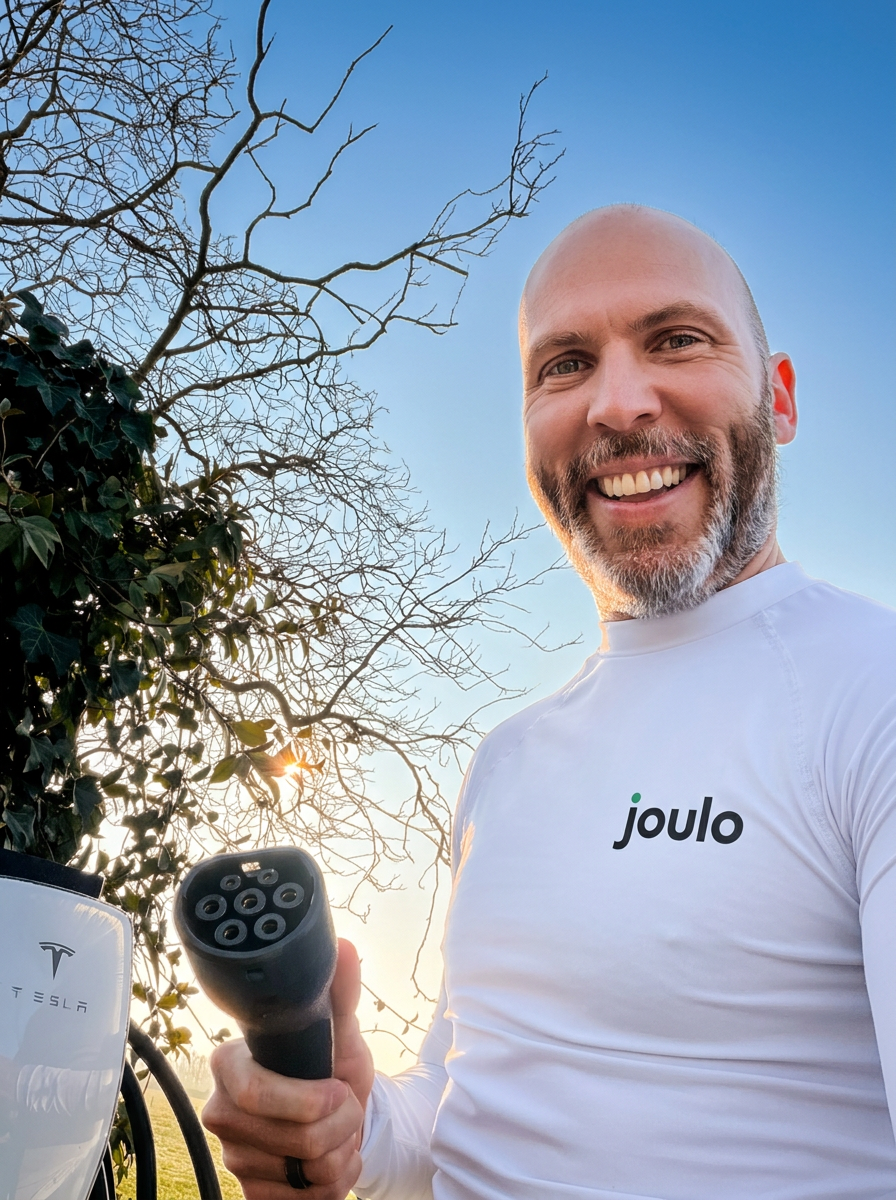
I maintain this comparison myself. Spotted something outdated? Email me: johan@joulo.nl • Johan Trip
Sources
- NEa – Inboeken elektriciteit (deadlines 1 maart, 1 april, 1 mei)
- NEa – Inboekverificatie en correctie tot 5 jaar terug
- NEa – Overzicht rekeninghouders REV
- NEa – Emissiereductie-eenheden (ERE)
- Eerste Kamer • Wetsvoorstel 36766
- NOS: Vervuilende bedrijven gaan de elektrische autobezitter betalen
- Vereniging Elektrische Rijders over ERE
- keuze.nl • ERE-vergelijker
- keuze.nl • eerste ERE-opbrengsten doorgerekend (jul 2026)
- laadpas.net • inboekers doorgerekend op echte verkopen
- ere-registreren.nl • vergelijking inboekdienstverleners
You connect once.We do the rest.
We measure, register and pay out every quarter. 20% service fee, cancellable yearly.